
Find Fort Bend County Residents
Let the question pick the source. An address suits a parcel question. A full name plus one more detail suits a person. Fort Bend County keeps those trails in different places. The appraisal roll gives the fastest current-property lead. The County Clerk records instruments tied to parties and legal descriptions, while the court system indexes cases by person or case type. George Memorial Library holds the older sources that connect a modern address to an earlier family.
A resident lookup works best when it narrows from a broad lead to a dated source record. A parcel owner may get mail elsewhere. A court caption names a party, not an address. A directory entry places a household in one year. It says nothing about the next. That distinction keeps a search fair and accurate.
- Use the Fort Bend Central Appraisal District search for an owner, street address, or property identifier.
- Check the county GIS viewer to see the mapped parcel, address point, subdivision, and jurisdiction context.
- Use the owner name and legal description in the County Clerk's recorded-document index.
- For an older household, consult local directories, obituary resources, and microfilm at George Memorial.
- Ask the custodian for an existing public record when a needed item is not online.
Fort Bend County Resident Records Offices
Three county offices anchor any Fort Bend County residents directory search. The County Clerk keeps recorded instruments and county-level records. FBCAD maintains the appraisal roll and parcel identifiers. Elections and Voter Registration handles registration questions, precinct information, and access rules for voter rolls. Their data overlaps at times, yet each office serves a distinct function. Locate the parcel first. Then continue through the Fort Bend County by-street directory for a longer address-by-address chain.
Fort Bend County Clerk
301 Jackson Street, Suite 101
Richmond, TX 77469
281-341-8685
Fort Bend Central Appraisal District
Current parcel and appraisal roll
Owner, situs, and account search
Property portal access
Fort Bend Elections and Voter Registration
3730 Bamore Road
Rosenberg, TX 77471
281-341-8670
Fort Bend County Parcel Search
FBCAD is the county's current property layer. Its public search runs in owner, address, ID, and advanced modes. The advanced form filters by owner name, street number, street name, Quick Ref ID, tax year, subdivision, neighborhood, geographic ID, and other specialized fields. Start broad when a full address fails. The district itself suggests a simplified street name, or a lone first or last name, when a narrow query returns nothing useful. Write down the tax year. Values and appraisal data can change.
| FBCAD search field | Use in a Fort Bend County search | Helpful note |
|---|---|---|
| Owner Name | Find a listed owner or business | First or last name alone may widen a narrow search. |
| Street Number and Street Name | Find the parcel at an address | Try a simplified street form when needed. |
| Quick Ref ID or Geographic ID | Return to a specific parcel | Keep the identifier with the result date. |
| Subdivision or Neighborhood | Limit a search to a development area | These are list or type-ahead filters. |
| Tax Year | Place assessment information in time | The interface displayed a 2026 certified roll. |
Treat the listed owner and mailing address as leads, not proof of residence. FBCAD also warns that legal descriptions and acreage need verification before any legal use. A parcel is a land unit in the appraisal and map systems. It is not a household list.
Fort Bend County Recorded Name Trails
The County Clerk's Official Public Records library reaches from 1821 to the present. Its Aumentum entry page is party-centered. It offers grantor and grantee lists plus a real-estate index. An address search usually becomes a person-and-legal-description search before it becomes a deed trail. Documented public controls include party name, grantor, grantee, date filed, instrument number, and document type.
A grantor conveys an interest. A grantee receives it. Neither role proves present occupancy. Follow the instrument date, document type, and legal description. Then compare the result against the appraisal account. The portal relies on cookies and JavaScript. The Clerk's online-copy, mail, drop-box, and counter channels remain useful fallbacks when a browser session fails.
- Roll
- A dated official list or system extract, such as an appraisal roll.
- Index
- A searchable guide to records, not necessarily the record image or certified copy.
- Parcel
- A mapped land account that can connect an address with appraisal information.
- Criss-cross directory
- A historical directory arranged by address or street rather than by surname.
Note: Preserve the source, search terms, date, and record label so another reader can tell an index lead from the underlying instrument.
Current Fort Bend County Resident Rolls
No single office publishes a complete current Fort Bend County residents directory. Several official and community sources answer narrower questions instead. A property record names the party on a parcel. A voter inquiry checks registration status under Texas rules, while a recorded index identifies people connected to an instrument. Community and historical collections add organization or time-specific clues. Pick the source that fits the question, and state plainly what it can and cannot confirm.
| Fort Bend source | What it can identify | Custodian | Access route |
|---|---|---|---|
| FBCAD appraisal roll | Parcel owner, situs, mailing clue, value context | FBCAD | Public property portal |
| Voter registration inquiry | Registration and precinct context | County Elections | Individual lookup and lawful request channels |
| Official Public Records index | Parties to recorded instruments | County Clerk | Public index, copies through Clerk procedures |
| Odyssey court portal | Case parties, roles, and docket activity | County and District Clerks | Case-area public access |
| Library and organization sources | Historical households or public organization contacts | Library or organization | Catalog, microfilm, or source-specific access |
Private compiled listings can blend dated files with same-name records. Official rolls have limits too. Still, they show the custodian, the record type, and the date. For family history, an estate question, or verifying a public filing, a source record wins. It beats a combined profile with no clear origin.
Fort Bend County Voter Lookup Limits
Fort Bend County's View My Voter Registration page asks you to pick a search method first. Nothing happens before that choice. Options include VUID, date of birth, first name, and last name. This is a registration inquiry tool, not a street roster for the county. It cannot confirm where someone physically lives right now. The Elections office also posts a Voter Street Guide and precinct maps. Those tools match an address to election geography. They do not describe every household on a Fort Bend County block.
Texas Election Code sections 13.004 and 18.005 split voter data into two groups. Some fields are public in specific contexts, and other data stays confidential. A voter can request web suppression. Protected individuals have alternate-address and confidentiality procedures available. The county also warns that registration information may not be used for commercial gain. It may not be used to advertise or promote products or services. Treat a missing result carefully. It is a coverage, spelling, privacy, or timing question, not a conclusion about a person.
Fort Bend County Court Search Layers
Fort Bend Odyssey Public Access organizes its research into several areas. These include Probate, Civil/Family, Criminal, and Court Calendar. The choices shift with the area you pick. Probate and civil/family searches run by case, party, attorney, or date filed. Criminal adds defendant and citation routes. Clicking a case-number link opens the Register of Actions. There, documents may appear as PDF or TIFF images.
Soundex helps with similar-sounding surnames, and a wildcard covers an incomplete name. The system will not accept both at once. A party name in a court result is a dated lead, nothing more. Check it against the case role, the filing date, the disposition, and another independent record before drawing conclusions. Sealed, juvenile, protected, and sensitive material can be unavailable. When an eligible document is not online, the District Clerk offers a copy-request and walk-in route.
George Memorial Fort Bend County Sources
George Memorial Library in Richmond bridges current indexes and historical residents directory material for Fort Bend County. Its Genealogy and Local History Department holds public microfilm reader-printers. It also keeps local-history books, obituary and burial databases, newspapers, and in-library genealogy resources. The Texas State Library recognizes the department as a Regional Historical Resource Depository. It serves Fort Bend and nearby counties. Microfilm copies run 10 cents a page, paid by coin. The Fort Bend Libraries network-relaunch notice documents a 2025 service change. That change followed a six-month outage. Check a current catalog or database route before making a special trip.
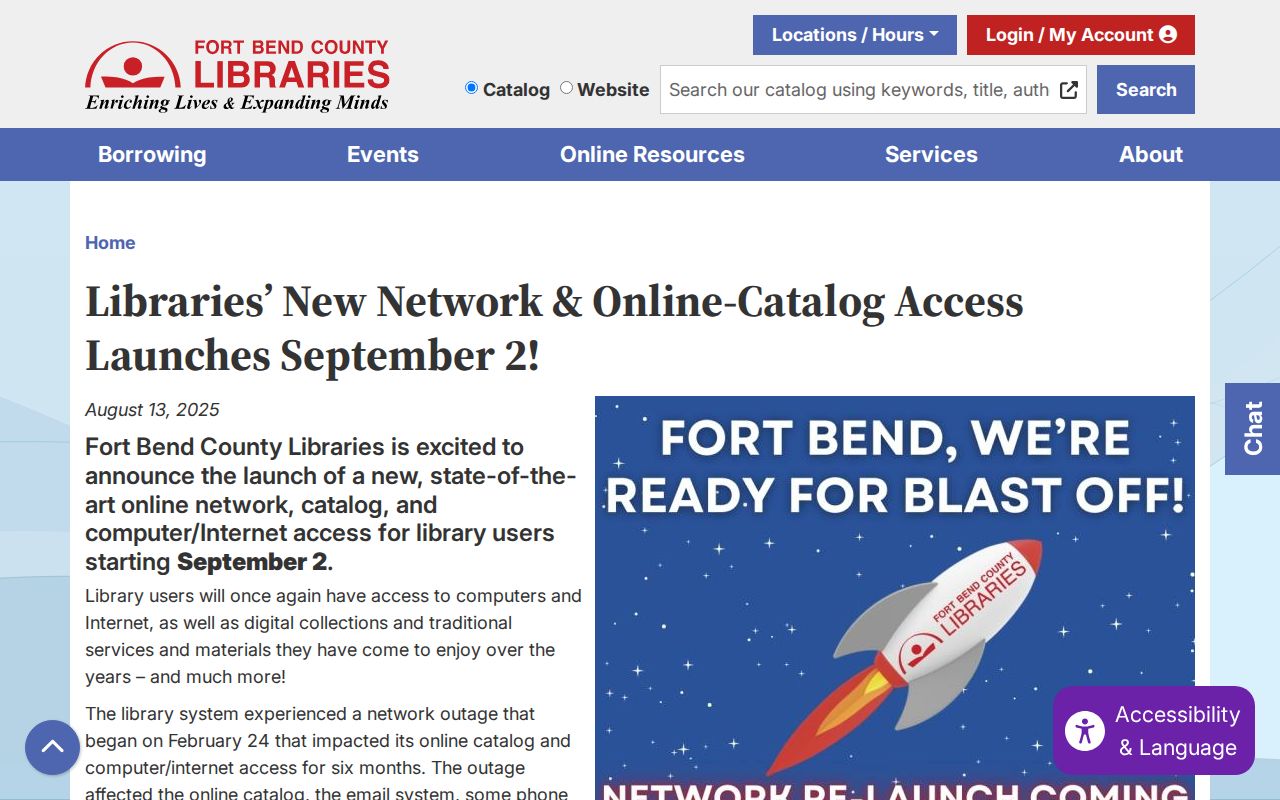
A catalog entry, obituary result, or microfilm reel is a historical lead with its own date and coverage. It complements a county record rather than replacing one.
Historical Fort Bend County Directory Trails
Historical Fort Bend County resident directories survive in scattered pieces, not a continuous run. Richmond Polk holdings include 1921-22, 1931, 1933, and selected years through 1983. Richmond telephone-directory leads include November 1947 plus October 1955 and 1956. These are holdings leads only. They do not prove every intervening year survives. Nor do they show the volumes cover all of today's county. The Fort Bend County city directories page details the full collections, entry conventions, and tracing method.
Texas State Library microfilm adds older county paths. Deeds run from 1838 to 1886 with an 1837-1897 index. Marriage records start in 1838, alongside probate material and a WPA naturalization index. A historical address may carry a community, survey, lot, or post-office label instead of a modern street form. Preserve that original label before connecting it to a current map.
The county history page supplies jurisdiction context. Fort Bend County and Richmond were organized and incorporated in 1837. That setting explains why an older record can name a different county, community, or place label altogether.
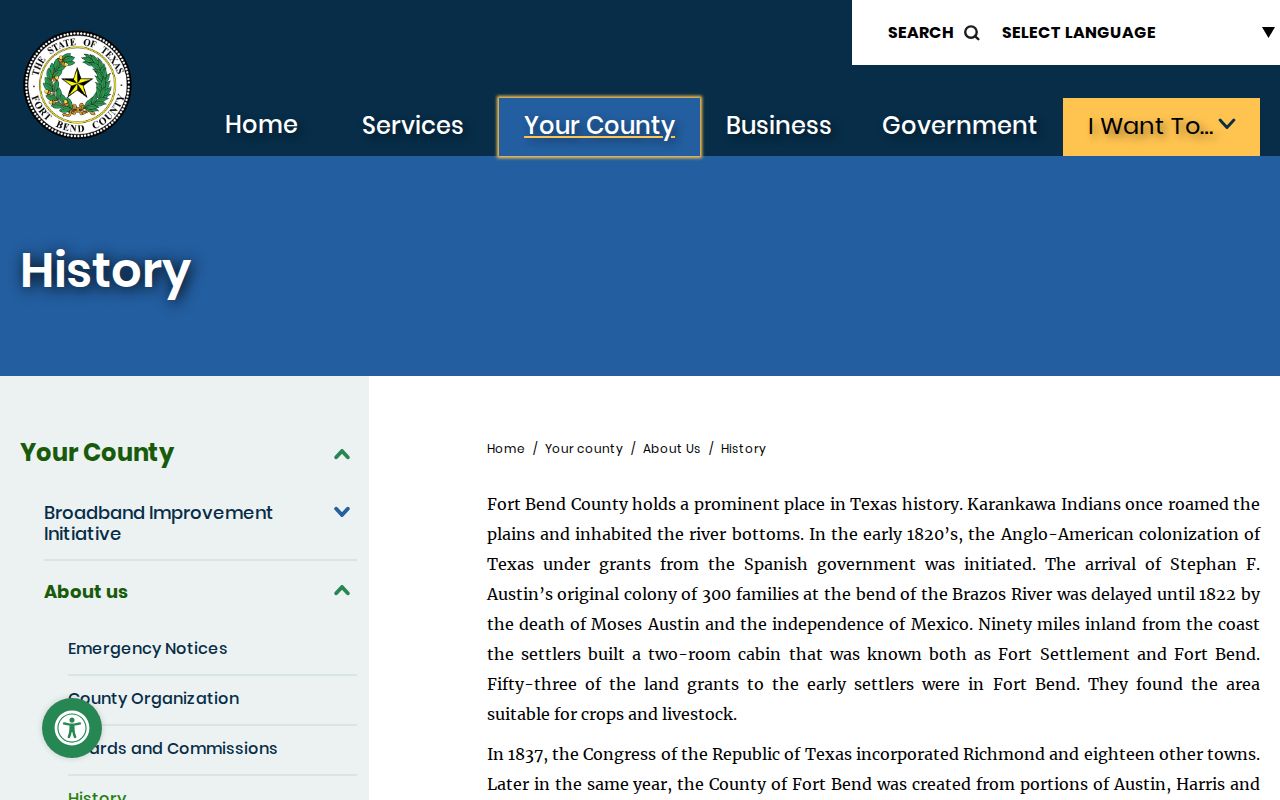
A historic volume fixes where a person or household appeared at one moment in time. It does not fill the years between surviving issues.
Texas Vital Record Timing
A vital index entry is not the same thing as a certified record. Each has its own access rules. Under Texas Government Code section 552.115, birth records become public after 75 years and death records after 25 years, and an unidentified decedent's record follows a separate one-year rule. Certified copies of current records carry qualified-person and identification procedures. Marriage application Social Security numbers stay confidential under section 552.141, and a divorce decree sits with the District Clerk as a court record rather than as a vital certificate.
Fort Bend County Clerk routes handle county-issued birth and death copies along with Fort Bend marriage material. For events anywhere in Texas, the state DSHS offers statewide applications and online ordering. The county channel and the state channel each have a place. Turn to the state when the county does not hold the event, or when an older index needs confirmation.
Fort Bend County ZIP Context
One Fort Bend County address can carry several disagreeing labels. These include a postal city, a municipal or ETJ classification, a GIS point, an FBCAD situs, and a recorded legal description. The county service-area list counts 34 ZIP codes. Several of them span multiple communities. ZIP 77469, for instance, includes leads for Fairchilds, Pleak, Richmond, Rosenberg, Sugar Land, and Thompsons. A ZIP is a postal routing aid. It is not a city-limit line. The official county service-area ZIP list makes a useful first check. Then verify delivery with USPS and locate the point in county GIS.
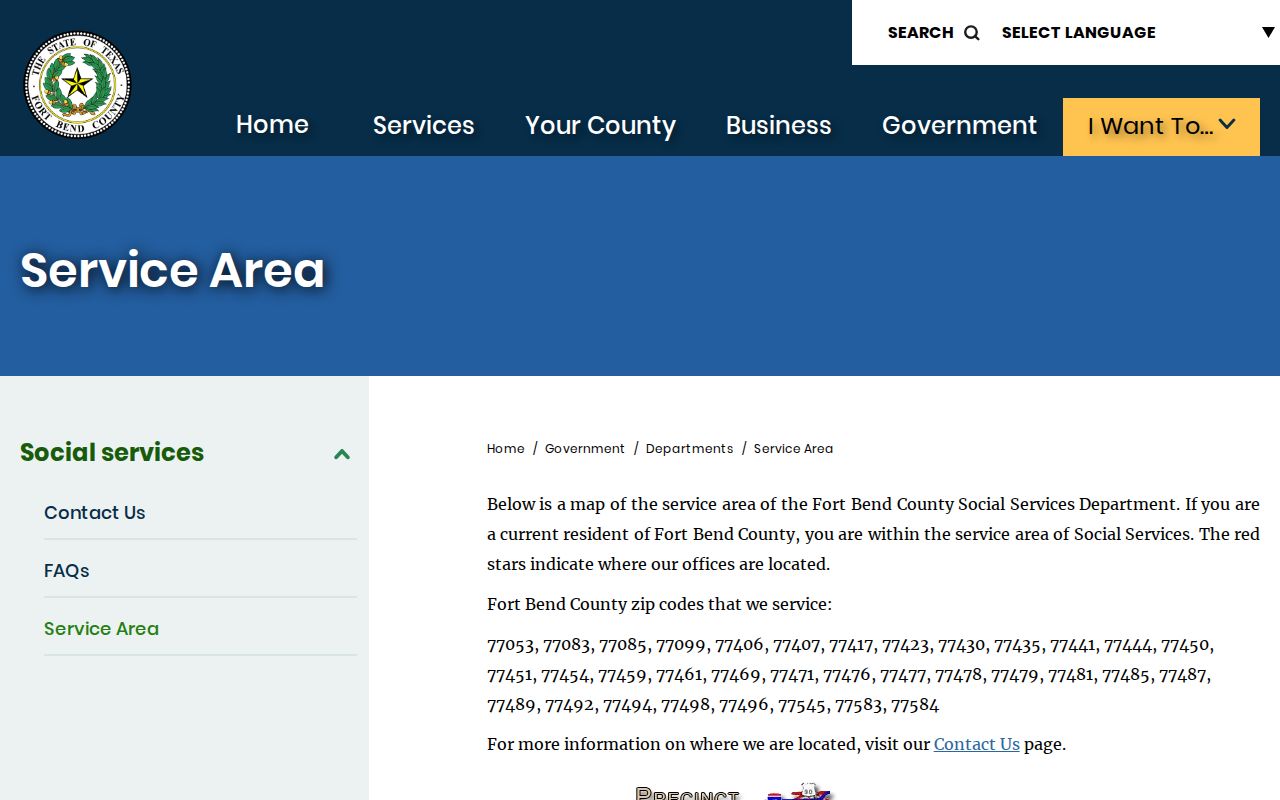
Keep the postal city and the map jurisdiction as separate fields whenever they disagree. Doing so preserves the authority behind each label in the Fort Bend County residents directory.
Fort Bend County Community Clues
Community sources round out a Fort Bend County search. They never amount to a household roll. Sugar Land keeps a voluntary neighborhood registration that the city itself describes as incomplete. The Central Fort Bend Chamber directory is a member-business resource. It is searchable by name, category, and ZIP. For historical family clues, George Memorial's obituary and burial resources are worth a look. Each source speaks to one organization or era.
None of these can reveal private membership or establish where a person lives today. For a broader civic and business picture, see Greater Fort Bend community information. It gives a regional view of the county.

Treat an organization listing as that group's own contact or membership directory. It is not a stand-in for a records office custodian.
Fort Bend County Records Scale
Fort Bend County grows fast, and its records show it. The same resident may appear under an initial, a maiden or married name, a business alias, an older spelling, or a neighborhood label. Postal designations shift too. Before merging two records, weigh the address, dates, parcel, spouse or parent names, legal role, or community tie. A shared surname alone proves little in a county directory this size.
The Census QuickFacts profile captures that population churn in context. The figures describe the county as a whole. They say nothing about any individual resident lookup result.
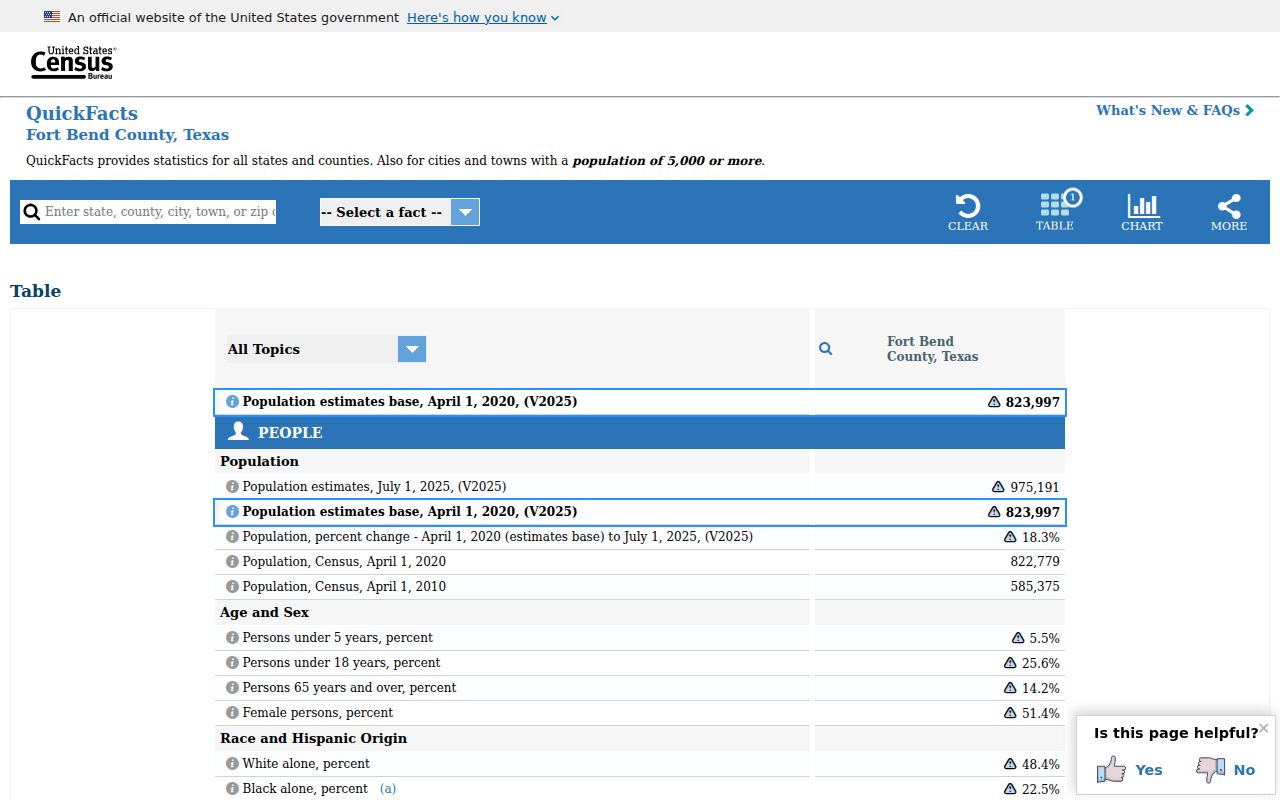
Record the spelling exactly as the source gives it. A later note may explain a variant, but never quietly overwrite the original form.
Fort Bend County Request Routes
Not every public record sits online. The Texas Public Information Act points the way when a document is missing from the web. Requests go to the public-information officer of the government body holding the record. Chapter 552 does not demand a stated purpose. It covers existing nonconfidential information, and it does not ask staff to create new analysis. Name the record type, parties, address, date range, agency, and format you want. The office can supply an estimate when charges apply.
The official Texas Public Information Act text governs both access and exceptions.
An online search is not the only path. Use a custodian's counter, mail, phone, copy-request form, or the library when the item stays offline.
Fort Bend County Record Safety
Some Fort Bend County records are closed off. Sealing, redaction, statutory confidentiality, or a safety program can each keep an item out of public view. Texas runs an Address Confidentiality Program that gives eligible victims a substitute address and mail forwarding, and voter confidentiality along with alternate-address rules can limit what appears online. A gap in the record is never a license to chase private information through a side channel.
Lawful personal research. Use public records for personal, family, civic, or property questions. Do not use a name, address, or record trail to stalk, harass, threaten, or harm anyone.
The County Clerk offers a free Property Fraud Alert for Official Public Records. A subscriber picks a name, business, or trust name. The Clerk then notifies the subscriber when that name appears in a newly recorded filing. It is an alert service, not a title search. The Clerk's FY2025 report counted 19,400 subscribers by the end of 2025, a dated measure of how widely Fort Bend County residents rely on the official alert route instead of unsolicited copy offers.