
Fort Bend Resident Lookup Coverage
One query seldom settles who someone is. A careful Fort Bend name check works best when each source is used for its narrow purpose: a parcel display supplies property context, a voter inquiry supplies registration context, and a court index supplies case context. Dates matter just as much as names. The right source can confirm a public affiliation or a dated event, while the wrong source can create a false match. Start with the record that answers the question you actually have, then compare it with a separate source.
| Record | What It Confirms | Where | Access |
|---|---|---|---|
| Property appraisal roll | Owner display, parcel situs, mailing-address clue, and assessment context | Fort Bend Central Appraisal District | Public display, but not proof of occupancy |
| Voter registration inquiry | Registration and precinct or district context | Fort Bend voter inquiry | Fields are governed by Texas election law |
| Court case index | Party role, case type, filing activity, and disposition lead | Fort Bend Odyssey Public Access | Restricted records and copy rules apply |
| Vital index or certificate | Life-event lead, date, and county trail | County Clerk and Texas DSHS | Index and certified-copy access differ |
| Business or license filing | Public filing role or covered professional status | Texas license routes | Public profile fields are limited by the issuing office |
FBCAD is a useful current-property lead because it can display an owner, situs, and mailing field. Those fields are not a finding that a person lives there. The County Clerk’s Official Public Records library reaches from 1821 to the present, but its index is party-centered. Move from an owner name or legal description to the Clerk’s grantor and grantee search rather than assuming that an address will find every recorded instrument.
Note: Preserve the source date and the field label, especially when a displayed mailing address differs from the taxable property situs.
Fort Bend Court Lookup Records
Odyssey Public Access separates Probate, Civil/Family, Criminal, and Court Calendar searches. Its Search By menu changes with the area selected. Probate and Civil/Family offer Case, Party, Attorney, and Date Filed. Criminal adds Defendant and Citation. The calendar area allows attorney, case, date range, judicial officer, or party or defendant name. Required fields are marked on the live form, so a name search should begin in the correct court area instead of treating the portal as one broad resident roll.
| Odyssey result detail | Why it helps |
|---|---|
| Case number and search area | Identifies the case trail and the court context. |
| Party role and party name | Shows how a name appears in that matter, not a universal identity finding. |
| Filing date and Register of Actions | Places the record in time and lists chronological filings. |
| Document link, status, or disposition | May lead to a PDF or TIFF image when public access permits. |
| Redaction or warrant marker | Signals that access or case status needs careful reading. |
Use Soundex for a similar-sounding surname or a terminal wildcard for an incomplete name, never both in the same query. A case-number link leads to the Register of Actions and then any available documents. Sealed, juvenile, protected, and sensitive material can be unavailable. For a document not online, the District Clerk offers a Copy Request Form and walk-in copy route; historic criminal, civil, and family indexes and minute books also have a Quick Link and an appointment-based Historical Documents Room fallback.
Verify a Fort Bend Resident
Same-name results are common in a fast-changing county. Build a match from two independent anchors, not from a name alone. A middle initial plus the same street, a dated deed legal description plus an obituary, or a court role plus a known event date can be enough to separate two people. Record spelling variants exactly as found. Married names, initials, hyphenation, and omitted middle names are normal search differences, not permission to merge records.
- Search FBCAD by owner name and record the parcel identifier, situs, and any mailing field as labeled.
- Compare the name through the voter inquiry only within the available lawful search method. A result is not proof of present physical residence.
- Run the person’s name and plausible variants in the appropriate Odyssey search area. Compare case dates, roles, and disposition.
- Use a marriage, death, obituary, burial, or library lead to test the time period for a former resident.
- Request an image or certified copy from the custodian only when that record is needed and the access rule permits it.
A docket is the chronological list of activity in a court case. An index is a finding aid, while an image is the actual scanned document when available. A certified copy is an office-issued copy carrying its certification, and it follows the custodian’s eligibility and fee rules. When the question shifts from one person to a nearby address, use the Fort Bend County street address directory for the separate street-by-street record chain.
- Docket
- The dated sequence of filings and events in a court case.
- Index and image
- An index points to a record. An image is the underlying scanned document when the portal allows access.
- Certified copy
- A copy issued and certified by the custodian, subject to its request, eligibility, and fee rules.
Fort Bend Vital Record Limits
Vital records can confirm a dated life event, but they are not an open current-person file. Under Texas Government Code Section 552.115 procedures, birth records become public after 75 years and death records after 25 years. An unidentified decedent’s record has a one-year rule. General indexes may provide a lead, while current certified birth and death copies require the qualified-person and identification process. Marriage application Social Security number information is confidential, and a divorce decree belongs with the District Clerk rather than the state verification product.
The Fort Bend County Clerk provides local birth, death, and marriage routes. Texas DSHS provides the statewide form library and the online vital-record ordering service for Texas events. If a current copy is allowed, follow the application, identification, payment, and delivery instructions from the issuing office. When a record is restricted, preserve the index lead and seek the lawful custodian route instead of trying to turn an index into a certificate.
Fort Bend Lookup Special Routes
Different questions need different official trails. Probate case records can identify an estate, administrator, or heir reference. Former classmates are better approached through yearbooks, alumni material, and the George Memorial Library genealogy collection. A birth-parent question belongs with the DSHS Central Adoption Registry, confidential-intermediary, or court process described in the state vital-record forms, never a sealed-file workaround. A business connection can be checked through the Texas Secretary of State and County Clerk assumed-name filings, but a business address is not a home address.
The Texas Medical Board license lookup is one example of a professional-status check for a covered field.
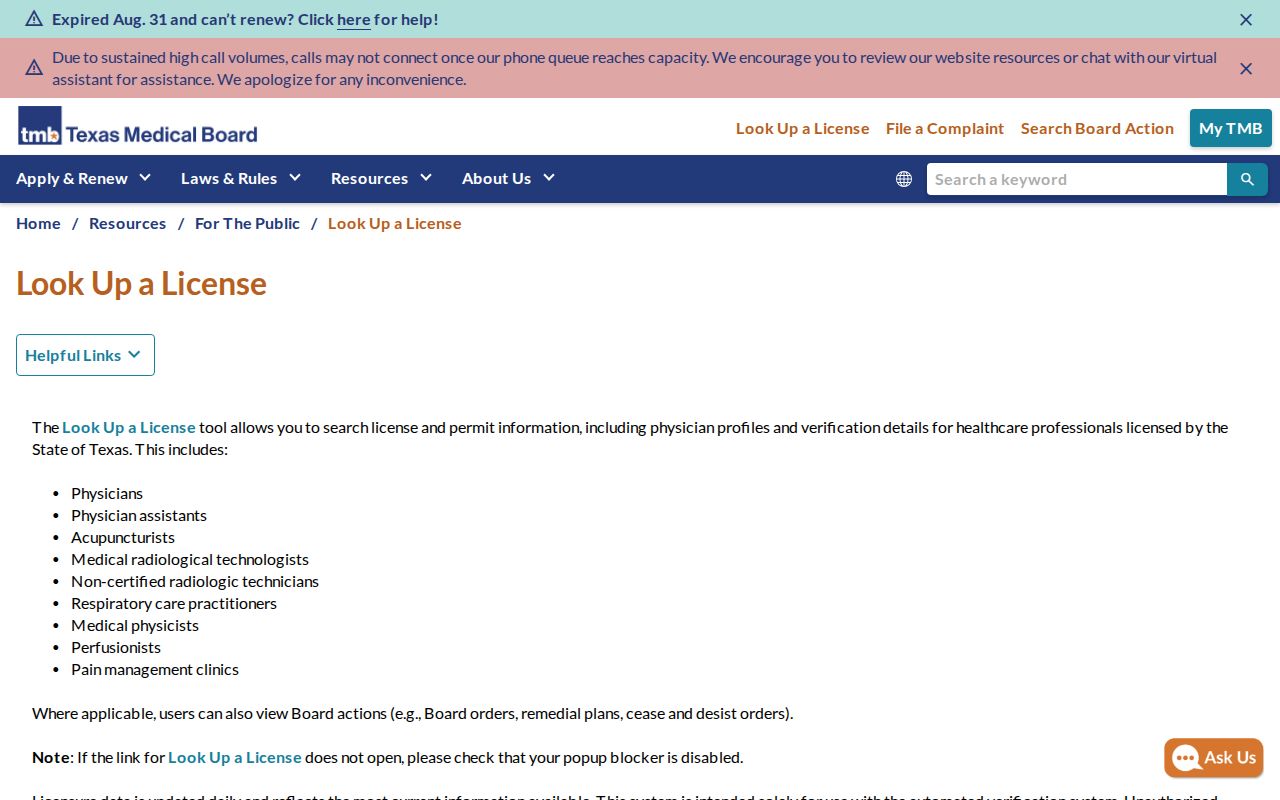
A board profile can show the license type, status, city, and actions the board publishes. Treat it as a professional record, not as proof of a person’s residence or identity outside that context.
Fort Bend Resident Record Fallbacks
When a public record is not online, use the Texas Public Information Act rather than guessing at a missing result. Texas Government Code Chapter 552 allows a request to the governmental body’s public-information officer without a statement of purpose. Name the record type, date range, names, address if relevant, agency, and preferred format. The office may release nonconfidential material promptly, provide an allowable fee estimate, or identify a confidentiality exception. A precise request seeks an existing record, not a new investigation.
For Clerk material, the documented routes include the online index, a copy request that can be delivered by mail or download after payment, mail, drop box, and in-person service. The District Clerk also accepts copy requests and has walk-in service. George Memorial microfilm and the Historical Documents Room can fill a historical gap. The County Clerk’s Property Fraud Alert is a separate free notification service for a name, business, or trust name that appears in newly recorded Official Public Records.
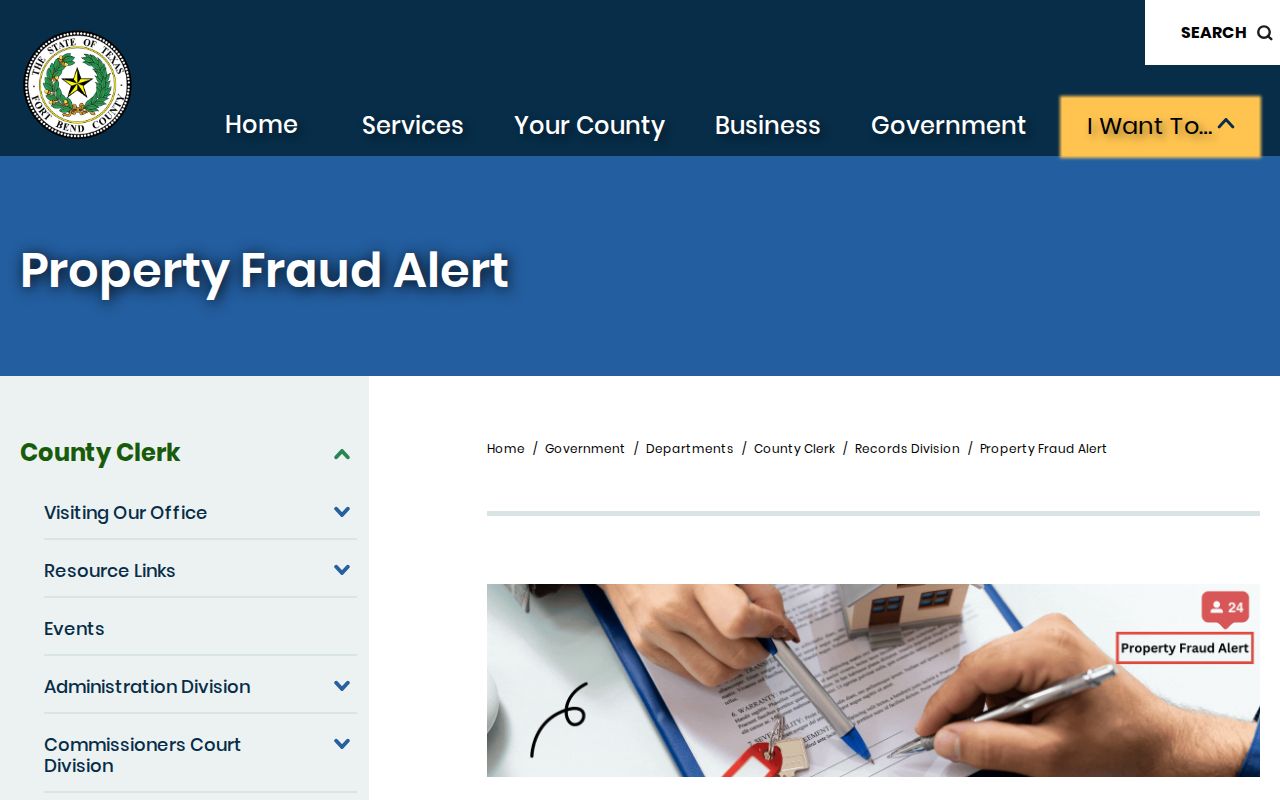
The alert can flag a new recording for review, but it does not establish title, occupancy, or the meaning of the instrument. Read the underlying record through the Clerk’s process.
Note: Keep a copy of the request wording, access date, fee estimate, and response so later verification has a clear trail.
Fort Bend Lookup Privacy Choices
Some missing records are protected by design. Texas Election Code Sections 13.004 and 18.005 distinguish public voter fields from confidential identifiers. The Fort Bend inquiry uses a search-method selector with VUID, date of birth, first name, and last name controls, but an individual result is not evidence of current residence. Do not reproduce VUIDs, protected addresses, driver-license or DPS identification numbers, Social Security numbers, telephone information, or voting choices. Web suppression also does not erase every lawful public-information request.
Texas’s Address Confidentiality Program provides a substitute address and mail forwarding for eligible victims of family violence, sexual assault, or stalking. It is distinct from ordinary web suppression and is not a reason to republish a protected address.
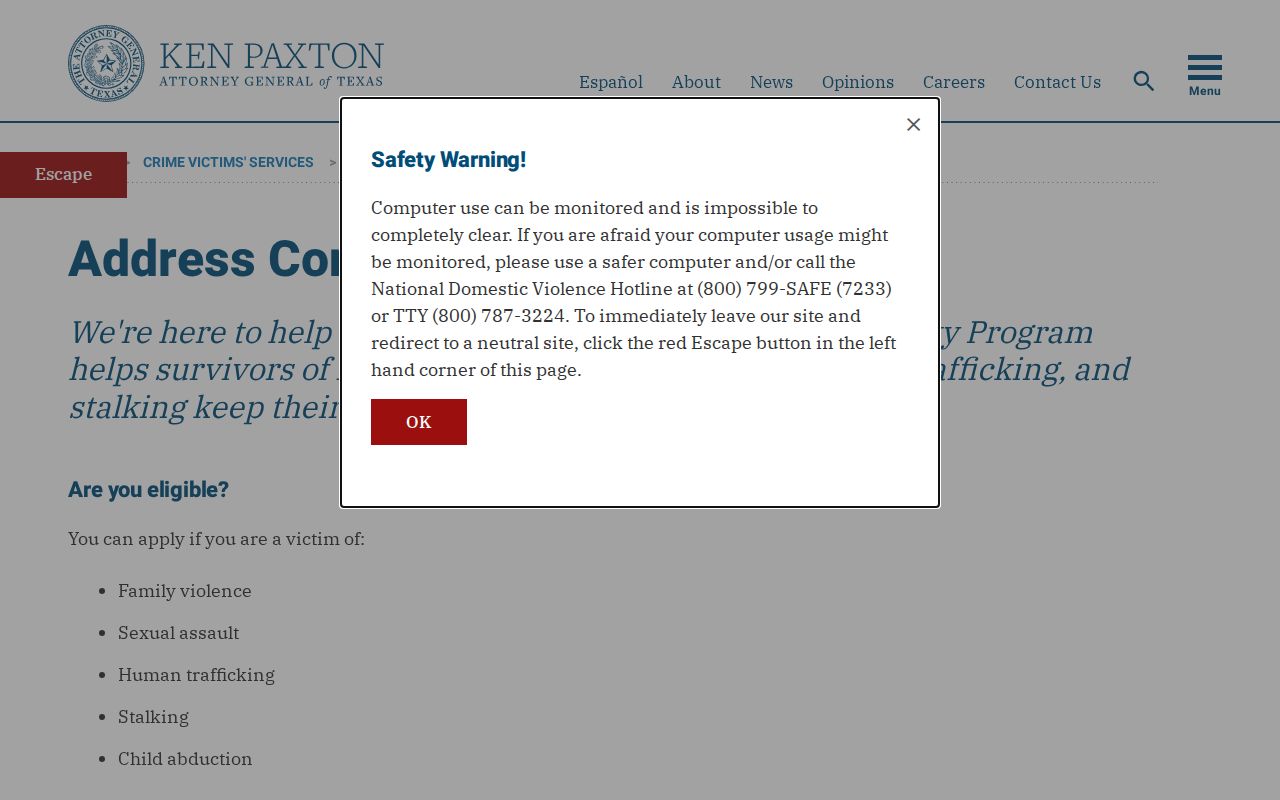
ACP applications can involve an advocate, protective order, or other qualifying documentation. Voter confidentiality and court sealing have their own rules, so ask the responsible custodian about the proper form or correction route.
Fort Bend Resident Search Safety
A record hit may be an index lead, an old mailing field, a name variation, or a restricted document that is not visible online. It is not a license to contact, follow, expose, or pressure another person. Preserve only the detail needed to verify the source and time period. If an address or identifier appears protected, stop and use the office’s confidentiality, redaction, or correction channel.
Texas Penal Code Chapter 42 provides the stalking-law context for handling personal information responsibly.
Verification is strongest when it respects both a record’s limits and a person’s safety. A missing result can reflect suppression, confidentiality, sealing, portal coverage, or a spelling difference.
Lawful personal research only. Use Fort Bend resident records for family, estate, reconnection, civic, or personal-safety questions. Never use them to stalk, harass, intimidate, or harm anyone.